


More than 58,000 children were sexually abused in the U.S. in 2017, according to the U.S. Department of Health and Human Services.
Many states are trying to curb those numbers — 20 now require sexual abuse prevention education by law. In 2009, Vermont became one of the first.
K-12 schools in Vermont are required to provide sexual violence prevention to all students. Schools must also provide parents with information.
Additionally, all schools and childcare facilities are required to train teachers and adult employees.
1 in 5 children in Europe may fall victim to some form of sexual violence.
High Prevalence: In some areas, 10% to 30% of children in the East Asia and Pacific region are victims of physical abuse.
Digital Risks: A 2025 report indicates 300 million children worldwide are affected by technology-facilitated sexual abuse annually. Child sexual abuse is a significant and under-reported issue. Research has indicated that a substantial number of children have faced, or are vulnerable to, "bad touch," which often occurs both inside and outside the family.
IoGT (Internet of Good Things): Organizations and platforms like IoGT South Asia provide resources to help educate children on these topics in countries like Nepal, Maldives, Bhutan, and Pakistan.
Asia Puppets Flipchart: A tool developed to teach children about sexual abuse and protection in rural areas of Asia.
Teacher Training: Research indicates that teachers in the Asia-Pacific region need training to identify abuse and address violence in schools, as discussed in the UNESCO Thematic brief. [
Recommendations from Reports:
-
Strategies for Enhancing Awareness and Protection
-
Regular Education Initiatives: Schools ought to introduce consistent, age-appropriate lessons on GTBT.
-
Emphasizing Rural Areas: Increased focus is essential in rural schools, where awareness is often lower, and stigma surrounding reporting is more pronounced.
-
Engaging Parents and Teachers: Key Concepts to Teach Children
-
Good Touch: Touches that make a child feel safe, comfortable, and loved, such as hugs from parents, high-fives, or a pat on the back.
-
Bad Touch: Any touch that makes a child feel uncomfortable, scared, confused, or ashamed, including touching private parts.
-
Body Autonomy: Teach that "Your body belongs to you" and it is okay to say "no" to unwanted affection, even from familiar people.
-
The "No, Go, Tell" Rule: If someone touches them inappropriately, children should loudly say NO, GO away immediately, and TELL a trusted adult.
-
Private Parts: Use correct anatomical terms for body parts covered by a
-
Empowering Children: Teaching children to confidently say "no" and encouraging them to report to a trusted adult is vital for their protection.
Teaching children about good and bad touch is crucial for their safety, focusing on establishing boundaries, naming body parts correctly, and encouraging open communication. Key strategies include teaching the "swimsuit rule" (private parts are covered by a swimsuit), empowering them to say "No," and establishing a "safety circle" of trusted adults.
How to Make Awareness and Teach Children:
-
Use Proper Anatomical Terms: Teach correct names for body parts (e.g., vagina, penis, buttocks) so children can clearly report if something wrong happens.
-
The Swimsuit Rule: Explain that areas covered by a swimsuit are private, and no one should look at or touch them, except for hygiene or medical reasons by trusted adults.
-
Define Good Touch (Safe): Touches that make them feel loved, safe, and comfortable (e.g., a high-five, a hug from parents, holding hands).
-
Define Bad Touch (Unsafe): Touches that make them feel uncomfortable, scared, confused, or that hurt. This includes touching private parts or forcing them to keep secrets.
-
Empower "No, Go, Tell": Teach children they have the right to say "No," move away ("Go"), and tell a trusted adult ("Tell") immediately if they feel unsafe.
-
Establish a "Safety Circle": Identify 3-5 safe adults (parents, teachers, grandparents) they can talk to if they feel uncomfortable.
-
Differentiate Secrets vs. Surprises: Explain that "good surprises" (like birthday presents) have an end date, but "bad secrets" (especially about touching) should never be kept.
Essential Guidelines for Parents and Guardians:
-
Initiate Early Conversations and Reinforce Regularly: Begin discussions at a young age and consistently revisit the topic to ensure understanding.
-
Respect Personal Boundaries: Allow children the autonomy to choose when to express affection, such as hugging or kissing family members, thereby fostering their understanding of bodily autonomy.
-
Practice Nonjudgmental Listening: If a child confides in you about an uncomfortable experience, respond calmly and offer your support.
-
Be Mindful of Physical Proximity: Recognize that many incidents of inappropriate behavior involve individuals familiar to the child, rather than solely strangers.
When Should You Teach About Good Touch and Bad Touch?
Parents play a crucial role in educating their children about their bodies, including the concept of private parts and the importance of personal boundaries. It’s essential to communicate that it’s not acceptable for others to touch these areas.
-
Target Age: Start teaching body safety to children aged 3 to 5.
-
Spread Awareness: Feel free to print and share this information with other parents and caregivers.
Why This Education Matters
Teaching good touch and bad touch helps children:
-
Build confidence
-
Understand personal boundaries
-
Protect themselves from abuse
-
Speak openly without fear
-
Develop healthy relationships
Awareness and communication are powerful tools that keep children safer and emotionally stronger.
Conclusion
Every child deserves to grow up feeling safe and respected. Teaching good touch and bad touch is not about creating fear — it is about giving children knowledge, confidence, and protection. When adults communicate openly and lovingly, children learn to trust themselves and seek help when needed.
Understanding Good Touch and Bad Touch
A Social Awareness Blog for Children, Parents
In today’s world, awareness about personal safety is more important than ever.
Children, teenagers, girls, boys, and even working women may sometimes face uncomfortable or unsafe touching situations in schools, homes, offices, public places, or social environments.
Many people stay silent because they feel scared, confused, embarrassed, or unsure about what happened. That is why learning the difference between good touch and bad touch is very important.
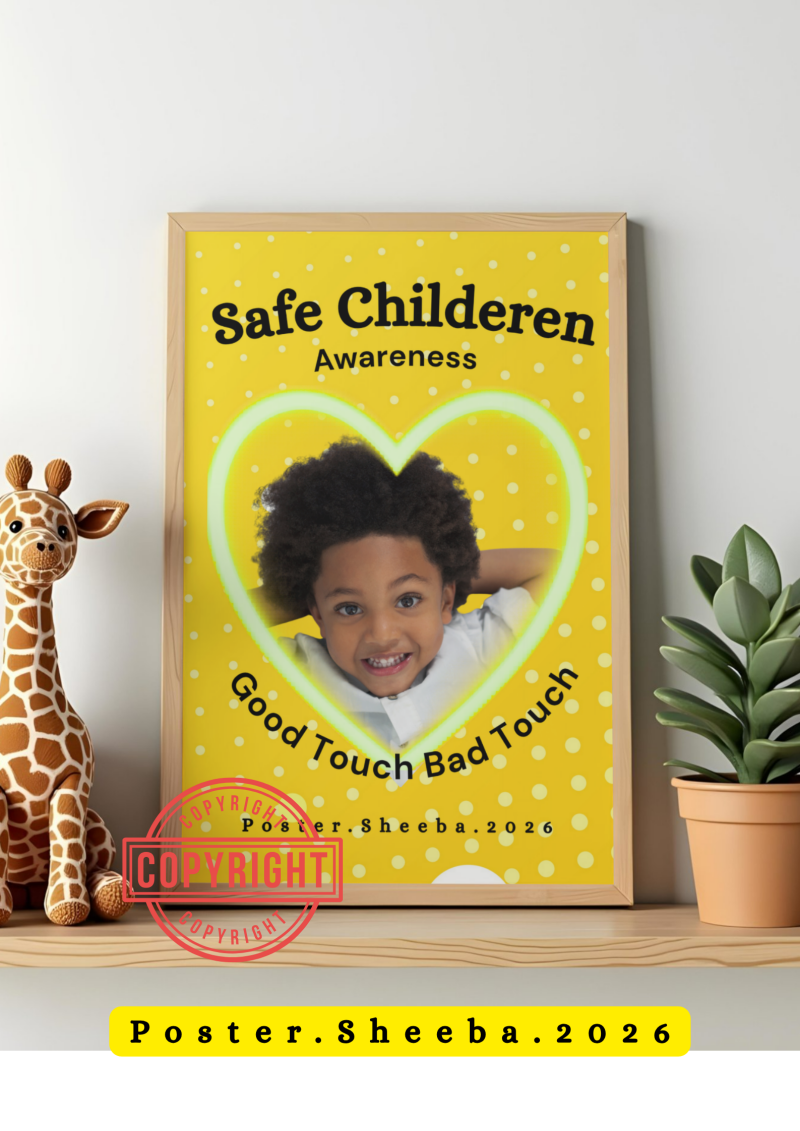
I designed this awareness poster to help people understand body safety, respect personal boundaries, and encourage everyone to speak up against harassment.
This blog explains the message behind the poster in a simple, clear, and easy-to-understand way for readers of all ages.
Why I Designed This Awareness Poster
As an artist and designer, I believe art can create change in society.
Awareness is key. We hold a responsibility.
You can freely download.
Download: Offers a simple template for kids to help them learn the difference between good touch and bad touch.